


Glaucoma is a progressive eye condition that can quietly damage vision over time, often without obvious discomfort in its early stages. Understanding the early signs of glaucoma (1) is critical because early detection and consistent management can significantly slow vision loss and preserve long-term eye health. This guide explains what to watch for, why symptoms occur, and how to manage them effectively through medical care, daily habits, and ongoing monitoring.
Understanding Glaucoma and Why Early Detection Matters
Glaucoma refers to a group of eye diseases that damage the optic nerve, usually due to increased intraocular pressure (IOP). The optic nerve is essential for transmitting visual information from the eye to the brain. When pressure builds up inside the eye, it can gradually impair this nerve, leading to permanent vision loss if untreated.
One of the biggest challenges with glaucoma is that symptoms often appear only after significant damage has already occurred. Recognizing the early signs of glaucoma (2) allows individuals to seek treatment sooner, reducing the risk of irreversible vision impairment. Fortis Healthcare, Understanding Glaucoma: Early Signs, Causes, and Prevention Strategies.
This Fortis Healthcare blog explains glaucoma signs, causes, diagnosis, treatments, and prevention strategies to protect vision through early detection and care.
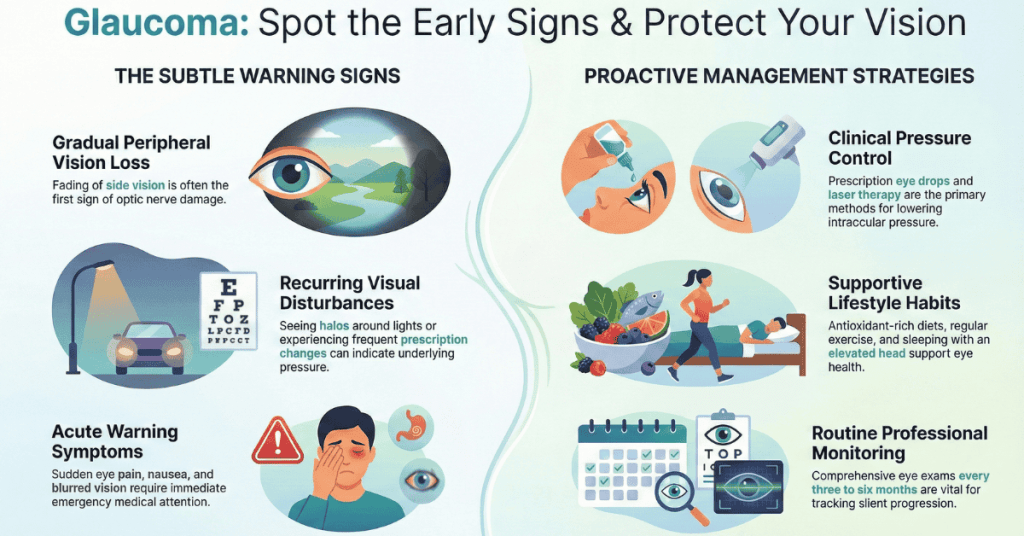
Common Early Warning Signs to Watch For
The early signs of glaucoma (3) can vary depending on the type of glaucoma, but several subtle symptoms are commonly reported:
- Gradual loss of peripheral (side) vision
- Difficulty adjusting to low-light environments
- Blurred vision or occasional visual disturbances
- Seeing halos around lights
- Mild eye discomfort or pressure
- Frequent changes in eyeglass prescriptions
These symptoms may come and go or progress slowly, making them easy to overlook. Routine eye exams are often the only way glaucoma is detected before noticeable vision loss occurs.
Types of Glaucoma and How Symptoms Differ
Different forms of glaucoma present differently:
- Primary open-angle glaucoma progresses slowly and painlessly, often with no noticeable symptoms until peripheral vision is affected.
- Angle-closure glaucoma may cause sudden eye pain, headaches, nausea, and rapid vision changes, requiring emergency care.
- Normal-tension glaucoma occurs even when eye pressure is within normal ranges, making symptom recognition more difficult.
Understanding which type you may be at risk for helps clarify which early signs of glaucoma (4) deserve immediate attention.
Medical Approaches to Managing Symptoms
Medical care remains the foundation of effective glaucoma symptom treatment. Most treatment plans focus on lowering eye pressure to protect the optic nerve.
Prescription eye drops are often the first line of treatment and may be combined with oral medications, laser therapy, or surgical options depending on disease progression. These interventions play a key role in controlling glaucoma symptoms by stabilizing pressure levels and reducing further nerve damage.
Consistent follow-up appointments are essential to adjust treatment as needed and ensure eye pressure remains within a safe range.
Supporting Eye Health Through Daily Habits
In addition to medical care, many patients explore lifestyle-based strategies to support eye health. While these approaches should never replace prescribed treatments, some people find that managing glaucoma naturally through healthy habits complements their care plan.
Helpful lifestyle practices include:
- Maintaining a balanced diet rich in leafy greens and antioxidants
- Engaging in regular, moderate exercise
- Avoiding smoking and excessive caffeine
- Managing stress through relaxation techniques
- Sleeping with the head slightly elevated
These habits may support circulation and overall eye health, contributing to reducing glaucoma symptoms over time when paired with medical supervision.
The Importance of Ongoing Monitoring
Glaucoma is a lifelong condition that requires consistent monitoring. Even when symptoms seem stable, changes can occur silently. Eye pressure measurements, optic nerve imaging, and visual field tests help track disease progression and treatment effectiveness.
Regular monitoring is a cornerstone of effective glaucoma symptom management, allowing adjustments before significant vision loss occurs. Glaucoma is a progressive eye disease damaging the optic nerve, often silently, requiring early detection and pressure-lowering treatment to prevent vision loss.
Living Well With Glaucoma
Being diagnosed with glaucoma can feel overwhelming, but many people maintain excellent quality of life with proper care. Recognizing the early signs of glaucoma (5) empowers patients to take an active role in protecting their vision.
Education, adherence to treatment, and open communication with an eye care professional help ensure long-term stability. With modern therapies and proactive self-care, most individuals can continue daily activities with minimal disruption. Baumrind Eye offers specialized services including glaucoma management, retinal care, diagnostic testing, and personalized treatment plans for long-term vision health.
Final Thoughts
Glaucoma may progress quietly, but its impact can be life-changing if left unmanaged. Learning to recognize the early signs of glaucoma (7) and committing to consistent treatment and monitoring can make a meaningful difference in long-term eye health. With a combination of medical care, healthy habits, and regular checkups, individuals can successfully protect their vision and maintain independence for years to come.
Understanding symptoms early, staying informed, and working closely with an eye care professional remain the strongest tools in managing this condition effectively. Baumrind Eye provides comprehensive ophthalmology and retina care using advanced technology to diagnose, monitor, and treat complex eye conditions.
Frequently Asked Questions
What treatments help manage glaucoma symptoms long term?
Long-term management typically includes prescription eye drops, laser treatments, or surgery to control eye pressure. These options aim to slow disease progression and preserve vision by addressing the root cause of symptoms rather than just discomfort.
How do eye drops help manage glaucoma symptoms?
Eye drops work by either reducing fluid production in the eye or improving fluid drainage. This helps lower intraocular pressure, which is essential for preventing further optic nerve damage and maintaining stable vision.
Can lifestyle changes help manage glaucoma symptoms?
Yes, lifestyle changes can support medical treatment. Healthy eating, regular exercise, stress reduction, and avoiding smoking may help improve overall eye health, though they should always complement, not replace, professional care.
How often should glaucoma symptoms be monitored?
Most patients require eye exams every three to six months, depending on disease severity. Frequent monitoring ensures early detection of changes and timely treatment adjustments.
Does managing eye pressure help slow glaucoma progression?
Yes, maintaining healthy eye pressure levels is the most effective way to slow glaucoma progression. Early intervention after identifying the early signs of glaucoma (6) significantly reduces the risk of vision loss.


