


Chronic dry eye is a persistent condition that affects millions of people worldwide and can significantly impact comfort and vision quality. Unlike occasional dryness that comes and goes, chronic dry eye can cause ongoing discomfort, irritation, and even long‑term damage if not treated properly.
In this article, we’ll explore chronic dry eye vs occasional dry eye, the difference between chronic and occasional dry eye, their symptoms, treatment options, and when to seek help. Understanding these distinctions can help you recognize your condition early and find relief sooner.
What Is a Chronic Dry Eye?
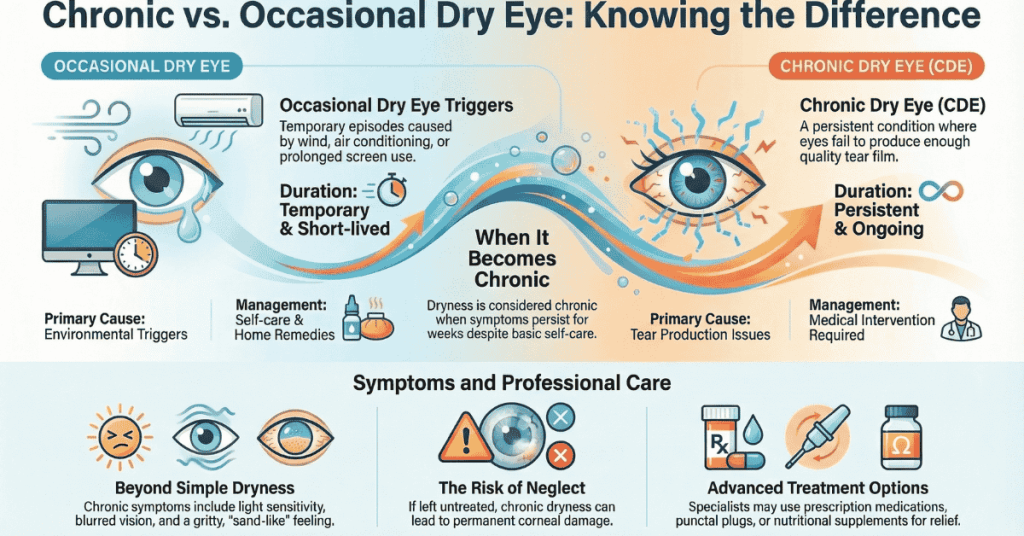
Chronic dry eye, also known as dry eye syndrome or keratoconjunctivitis sicca, occurs when your eyes do not produce enough tear film or the tears evaporate too quickly. This condition leads to constant irritation, inflammation, and discomfort.
Tears are vital for:
- Maintaining clear vision
- Protecting the eye surface
- Washing away debris and bacteria
When tear quality or quantity is compromised, the eye surface becomes dry and inflamed, resulting in chronic dry eye symptoms that don’t resolve easily without proper management.
How Is Occasional Dry Eye Different?
In contrast, occasional dry eye happens when the eyes are dry temporarily due to specific triggers. These episodes are short‑lived and often resolve on their own or with simple self‑care.
Examples of triggers for occasional dry eye symptoms include:
- Spending long hours staring at screens
- Exposure to air conditioning or dry heat
- Spending time outdoors in windy conditions
- Allergies or mild irritation
Understanding the difference between chronic and occasional dry eye helps determine whether lifestyle changes will help or if medical intervention is needed.
Chronic Dry Eye vs Occasional Dry Eye: Key Differences
Here’s a clear comparison to help you understand how these conditions differ:
| Feature | Chronic Dry Eye | Occasional Dry Eye |
| Duration | Persistent | Temporary |
| Pain & Irritation | Ongoing | Mild & short‑lived |
| Causes | Tear production issues or inflammation | Environmental triggers |
| Treatment | Medical management needed | Self‑care or brief home remedies |
| Vision Impact | Can blur vision | Minimal or temporary |
If symptoms are ongoing and interfere with daily activities like reading, driving, or working at a computer, you may be experiencing chronic dry eye rather than occasional dryness.
What Are the Symptoms of Chronic Dry Eye?
Chronic dry eye often presents with a combination of symptoms that differ in severity from occasional dryness. Common chronic dry eye symptoms include:
- A scratchy or gritty feeling in your eyes
- Burning or stinging sensations
- Redness and irritation
- Sensitivity to light
- Blurred vision
- Excessive watering (reflex tearing)
- Difficulty wearing contact lenses
These symptoms tend to persist throughout the day and may worsen in certain environments. If you’re noticing these signs regularly, it’s worth consulting an eye care professional for a comprehensive evaluation.
Causes of Chronic Dry Eye
Chronic dry eye can result from several underlying issues, including:
1. Meibomian Gland Dysfunction
When the oil glands that help prevent tear evaporation don’t work properly, tears break up too quickly.
2. Aging
Tear production naturally decreases as part of the aging process.
3. Medications
Certain medications, including antihistamines and antidepressants, can reduce tear production.
4. Autoimmune Conditions
Diseases like Sjögren’s syndrome often affect tear glands.
5. Environmental Factors
Dry climates, wind, and prolonged screen use can contribute.
Symptoms that persist despite lifestyle changes often indicate chronic dry eye rather than occasional cases.
How Chronic Dry Eye Is Diagnosed
A comprehensive eye exam will evaluate tear quality and surface integrity. Some assessment methods include:
- Slit lamp examination
- Tear breakup time testing
- Schirmer tear test
- Meibomian gland evaluation
Early diagnosis can help prevent eye surface damage and ensure a more effective chronic dry eye treatment plan.
For expert evaluation and management, visit our office at Baumrind Eye or schedule an appointment here: Contact Us.
Chronic Dry Eye Treatment Options
Managing chronic dry eye often requires a combination of therapies tailored to your needs.
1. Artificial Tears & Lubricants
Over‑the‑counter eye drops help supplement natural tears.
2. Prescription Eye Medications
These reduce inflammation and help increase tear production.
3. Punctal Plugs
Small devices placed in tear ducts to retain moisture.
4. Nutritional Supplements
Omega‑3 fatty acids can help improve tear composition.
5. Lifestyle Adjustments
Increasing humidity, taking screen breaks, and wearing protective eyewear outdoors.
Selecting the right combination of treatments depends on severity and lifestyle factors. An eye care specialist can guide you through the best options. For additional insights into long‑term management strategies and lifestyle adjustments that may help relieve dryness, see this detailed article on how to address dry eye symptoms from Medical News Today.
When to See an Eye Care Professional
If you’re noticing persistent irritation, blurred vision, or ongoing discomfort that doesn’t go away with over‑the‑counter remedies, it’s essential to seek professional care. Left untreated, dry eye can lead to corneal damage and affect daily comfort and function.
FAQs About Dry Eye
1. How long does the occasional dry eye last?
Occasional dry eye usually resolves within a few hours or after eliminating the trigger, like resting your eyes from screen time or using a humidifier.
2. When does dry eye become chronic?
Dry eye becomes chronic when symptoms persist for weeks or months and do not improve with basic self‑care.
3. What is the best treatment for chronic dry eye syndrome?
Effective chronic dry eye treatment may include prescription medications, in‑office procedures, and lifestyle changes suited to your diagnosis.
4. What home remedies help occasional dry eye?
Simple remedies include warm compresses, blinking regularly during screen use, and using artificial tears.
5. Can occasional dry eye turn into chronic dry eye?
Yes. If occasionally dry eyes are frequent and prolonged without proper management, they may develop into a chronic condition.
Conclusion
Understanding the difference between chronic and occasional dry eye empowers you to take action and seek appropriate care. While occasional dryness may be temporary and manageable with simple measures, chronic dry eye requires professional evaluation and targeted treatment.
If you’re in need of personalized care or suspect persistent dryness, contact Baumrind Eye today to start your eye health journey, Visit our Home page for more information on services and care.


