


Are you experiencing gritty or itchy eyes? Are your eyes feeling as if there is sand in them? Or they water a lot, or feel blurry, especially after a long day?
Chances are, you have dry eye symptoms.
Of course, yes. Some of these symptoms are associated with tired eyes, making it a bit complicated to tell the difference between dry eyes and normal eye itching. Dry eyes happen when the eyes don't produce enough tears to keep them lubricated, leading to irritation. According to one study, nearly 16.4 million people in the USA have dry eye.
We’ll cover what dry eyes are, common dry eye symptoms, and the key signs that mean you should book an appointment with an eye doctor.
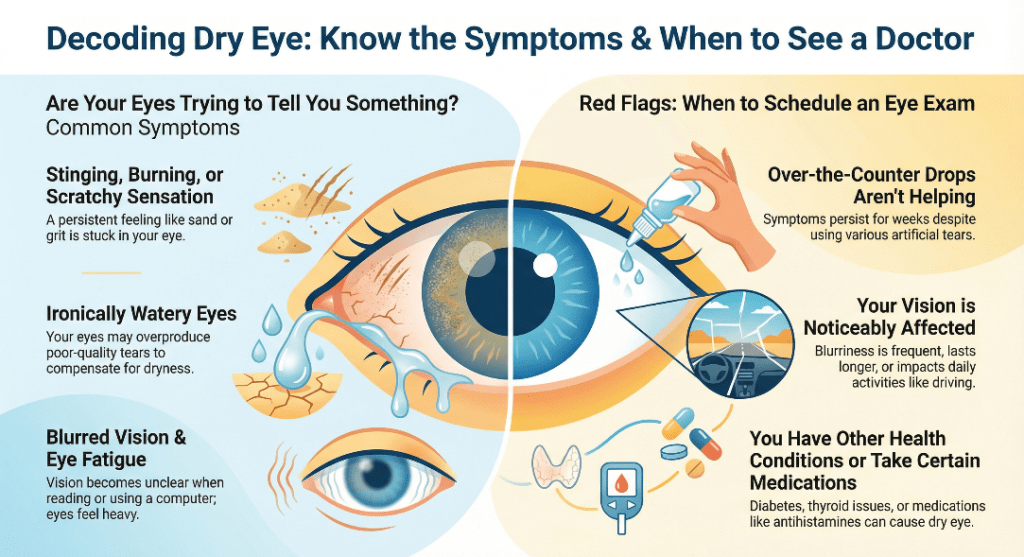
Common Dry Eye Symptoms: Are You Experiencing Them?
Symptoms of dry eye can be easily mistaken for basic eye strain. But the dry eye comes with its own set of feelings. Here are the most common ones:
A Stinging, Burning, or Scratchy Feeling:
This is the most frequent and common symptom. It can feel like something is constantly in your eye.
Grittiness or Sandy Sensation:
You may feel that sand or grit is under your eyelids.
Redness:
Your eyes may be bloodshot or sore.
Light Sensitivity:
Even in the house, seeing bright lights may become uncomfortable.
Watery Eyes:
Ironically, dry eyes may be watery! However, there are occasions when your eyes produce watery tears to compensate for dryness. These tears don't have enough oil to lubricate the eyes.
Blurred Vision:
You may have blurred vision, particularly when reading or using a computer. Blinking usually clears it for a moment.
Eye Fatigue:
Your eyes are tired, heavy, or sore, particularly when you have been concentrating on something.
Problem with Wearing Contact Lenses:
Lenses may feel scratchy or uncomfortable.
Night Driving Problems:
Glare from headlights can cause discomfort, and vision may feel less clear.
If such dry eye symptoms happen to you, make sure to note the frequency and severity of these symptoms.
When to See an Eye Doctor: The Key Signals
Generally, most people use OTC eye drops to ease their dry eyes. However, these may be useful only for occasional dryness. There are specific times when self-treatment may not work, meaning that you should visit your doctor. This is when you schedule such an appointment.
Your Symptoms are Relentless and Unresponsive.
When your pain or irritation doesn't go away despite using lubricating eye drops, this is a red flag. When you are experiencing dry, irritated, or watery eyes most days or for a few weeks, it is time to visit a doctor.
Self-treatment Drugs are Not Curing.
If the usage of different brands of artificial tears doesn’t help, your dry eye condition is likely to be more complicated. It might require more serious treatment or another method that can be offered only by a doctor.
Your Vision is Affected.
An eye doctor checks for any changes in your vision. When your blurry vision happens regularly, lasts longer, or affects your day-to-day life (reading or driving), look for medical attention. Dry eyes may impact the surface of your eye over time if not treated. This may lead to more severe vision challenges.
You Have Intense Pain or Redness.
Although some irritation in dry eyes is totally normal, extreme pain is not. In case your eyes are very sore, and they are very red, or you feel that something is in your eyes that won’t go away, see a doctor immediately. This may be a sign of an infection or another severe eye infection.
You Have Other Medical Conditions.
Dry eyes may be caused or aggravated by certain medical conditions. These include:
- Autoimmune diseases (such as rheumatoid arthritis, lupus, or Sjogren syndrome)
- Diabetes
- Thyroid disorders
You are on Medications.
If you take certain medications, you may experience dryness in your eyes, as many common medications can cause dry eye as a side effect. Some examples of these types of medications are antihistamines (for allergies), decongestants (for cold), antidepressants, blood pressure medications, and acne medications. If you develop dry eyes while taking medications, make sure to talk to both your prescribing doctor and your eye care provider. They may be able to recommend an alternative or help with dry eye relief options.
You Wear Contact Lenses
Contact lens wearers are more prone to experiencing dry eyes. If your contact lenses feel uncomfortable, gritty, or blurry, and you suspect you may have dry eye, reach out to your eye care provider to learn whether your symptoms are caused by dry eyes. Your eye care provider may recommend using another type of contact lens, a different wearing schedule, or a different type of eye drop that is safe for contact lens wearers.

How an Eye Doctor Can Help with Dry Eyes
An eye specialist performs a thorough eye exam to check your vision. They will evaluate the condition of your eyes, including your eyelids.
They will test how much tear production you have and how fast your tears evaporate.
They will determine the reasons for your dry eyes. Is it due to insufficient tear production? Or is the quality of tears poor? Is there an environmental cause? Or is there an underlying health condition?
Depending on the cause and severity, they will recommend various treatment options such as:
- Prescription Eye Drops (Stronger than OTC).
- Punctal Plugs (Small Devices Used to Help the Eyes Retain Tears Longer).
- Lid Hygiene Routines (Certain Types of Dry Eye).
- Nutritional Supplements.
- Lifestyle changes
Don't Wait: Protect Your Eye Health
Ignoring persistent dry eye symptoms can lead to a whole host of more serious medical issues, including eye infection, damage to your cornea, and possibly permanent vision impairment. Don’t ignore your eye health.
If you are experiencing any degree of irritation or discomfort with your eyes, make sure to consult an ophthalmologist, who may provide you with a definitive diagnosis and a workable treatment plan. At Baumrind Eye, we go beyond general advice to provide a personalized roadmap for dry eye relief. Our dry eye specialist is dedicated to restoring the clarity and comfort your eyes deserve. Schedule an appointment now!
FAQs
What are the most common dry eye symptoms?
The typical dry eye symptoms are stinging, redness, a gritty feeling as if there is sand in the eyes, blurred vision, and sensitivity to light.
When should I see an eye doctor for dry eye symptoms?
In case of persistent symptoms, with severe pain, or unresponsive to simple over-the-counter therapies, you should see a doctor.
Can dry eye symptoms go away on their own?
Generally, mild cases of dry eyes caused by prolonged usage of a computer may be eased by taking a rest. If you are experiencing chronic dry eye symptoms, you will need to see a medical professional for quick relief.
How do I know if I have chronic dry eyes?
You are likely to have chronic dry eyes if your symptoms are constant, long-term, and significantly impact your daily life.
What treatments provide long-term dry eye relief?
Treatment plans for long-term relief of chronic dry eyes may include a combination of prescription topical agents, therapeutic lid hygiene practices, and procedures designed to identify and treat the underlying source of your dryness.


