


Your child’s vision plays a critical role in their development, learning, and overall well-being. Scheduling a pediatric eye exam is one of the best steps parents can take to ensure healthy vision from the start. If you're planning your child’s first visit to a pediatric optometrist, this guide will walk you through everything you need to know—what to expect, how to prepare, and why it matters.
Why Early Eye Exams Are Important for Children
Many vision issues can go undetected in young children, especially because they might not realize their vision is impaired. Undiagnosed vision problems can lead to difficulties in school, developmental delays, and even behavioral issues. A comprehensive eye test for kids helps detect:
- Nearsightedness or farsightedness
- Astigmatism
- Eye alignment problems (like strabismus)
- Lazy eye (amblyopia)
- Depth perception or color vision issues
The American Optometric Association recommends a child’s first eye exam around 6 months of age, again at age 3, and then before starting school.
Preparing for the First Eye Exam for Toddlers
Before the appointment, explain to your toddler or young child what to expect using simple, friendly language. You might say, “The eye doctor will check how well your eyes can see and if they are strong.” You can even role-play a mock exam at home using a flashlight and a toy to ease any anxiety.
Bring along:
- Medical history and list of any medications
- Any concerns you have about your child's vision
- Your child’s favorite toy or snack for comfort
What Happens During a Pediatric Eye Exam?
When you visit a pediatric eye doctor near me, the experience is designed to be calm and child-friendly. Here’s a step-by-step look at what usually happens:
- Health and Vision History
The doctor or staff will begin by asking about:
- Birth history (premature birth, complications)
- Family history of eye conditions
- Any developmental delays or learning difficulties
- Vision Screening
This part includes a children’s eye test using age-appropriate tools:
- Infants and toddlers: Preferential looking tests (e.g., Teller acuity cards)
- Preschoolers: Picture charts or matching games
- School-aged children: Standard letter charts
- Eye Movement and Coordination Tests
The pediatric optometrist will check how well your child's eyes move and work together. This includes:
- Tracking moving objects
- Focusing on near and distant targets
- Checking eye alignment
- Eye Health Evaluation
Using specialized lights and magnifiers, the doctor examines:
- The external parts of the eye (eyelids, cornea, etc.)
- The internal structures (retina, optic nerve)
- Pupil responses and eye pressure (if needed)
- Dilation
For a thorough exam, the doctor might use eye drops to dilate your child’s pupils. This allows a better view of internal eye structures. It may cause blurred vision and light sensitivity for a few hours, but it’s safe and temporary.
What If Glasses Are Needed?
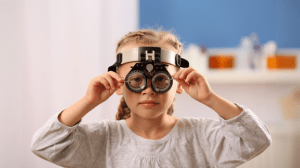
If the pediatric eye exam indicates that your child needs corrective lenses, don’t worry—it’s more common than you might think. The doctor will guide you on:
- Choosing child-friendly, durable frames
- Understanding your child's prescription
- Encouraging your child to wear glasses regularly
Sometimes, vision therapy or follow-up visits may be recommended, especially for conditions like lazy eye or convergence insufficiency.
Tips to Make the Experience Easier
Taking your child for their first eye exam can feel like a big milestone—for both of you! While it’s a crucial step for ensuring healthy vision, it’s natural for children to feel a bit nervous. Fortunately, a few simple strategies can go a long way in making the experience smooth and stress-free.
First, schedule the appointment at a time when your child is well-rested, like in the morning or after a nap. A tired or cranky child is more likely to feel overwhelmed. Next, bring along something comforting, like their favorite stuffed animal or blanket. Familiar items can offer emotional security in new environments.
Reassure your child by explaining that the visit won’t hurt. Use calm, positive language—say things like “The doctor will just shine a light and show you fun pictures.” Finally, celebrate the visit with a small reward afterward—ice cream, a playground visit, or a sticker can help reinforce that going to the eye doctor is a positive experience.
These small but meaningful steps can help your child feel confident and safe during their first eye exam—and set the tone for future visits.
Signs Your Child May Need an Eye Exam
Even outside of a regular schedule, you should book a pediatric eye exam if you notice any of the following:
- Squinting, rubbing eyes often
- Sitting too close to the TV or holding books too near
- Frequent headaches or eye strain
- Poor performance in school
- Avoiding reading or other close-up tasks
Choosing the Right Pediatric Optometrist
Finding the right eye care professional for your child can make all the difference. Look for a pediatric optometrist with experience, a child-friendly office, and a calm, engaging approach. At Baumrind Eye, we specialize in gentle, thorough care for children of all ages.
You can also visit our Google Business Profile to read reviews from other parents who trust us with their children’s eye health.
Common Myths About Pediatric Eye Exams—Debunked
Myth 1: “If my child can see well, they don’t need an eye exam.”
Fact: Children can still have issues like poor eye coordination or depth perception that aren’t noticeable without an exam.
Myth 2: “Eye exams are scary or painful.”
Fact: Exams are non-invasive, quick, and designed to make kids feel at ease.
Myth 3: “Only school-age kids need eye exams.”
Fact: Early detection—even in toddlers—can prevent long-term issues.
For general information on eye exams, you can also check this helpful resource.
Schedule Your Child’s Exam Today
Taking the first step toward your child’s healthy vision is easy. If you're looking for a pediatric eye doctor near me, Baumrind Eye offers comprehensive exams in a welcoming, kid-friendly environment. Contact us to schedule your child’s first visit or learn more about our pediatric services.
Final Thoughts
A pediatric eye exam is more than just a vision check—it’s a preventive measure that ensures your child can thrive at every stage of life. From their first steps to their first day of school, healthy eyesight supports learning, development, and confidence. With a supportive pediatric optometrist, your child will be in safe hands.
Book your appointment today with Baumrind Eye and give your child the clear vision they deserve.


