


Dry macular degeneration is one of the most common causes of vision loss in older adults. It affects the macula, the central part of the retina responsible for sharp, detailed vision. While this condition usually progresses slowly, understanding how it develops can help people recognize symptoms early, manage risk factors, and seek timely care.
In this blog, we’ll explore macular degeneration, how it progresses over time, and what happens at each stage. Knowing the stages of dry macular degeneration can make a meaningful difference in protecting long-term vision and quality of life.
What Is Dry Macular Degeneration?
Dry macular degeneration is a chronic eye condition caused by the gradual breakdown of light-sensitive cells in the macula. It is the more common form of age-related macular degeneration (AMD), accounting for nearly 80–90% of cases.
Unlike wet AMD, this condition does not involve abnormal blood vessel growth. Instead, it develops as waste deposits called drusen accumulate under the retina, interfering with normal vision over time. Although Degeneration does not usually cause sudden blindness, it can significantly impact daily activities such as reading, driving, and recognizing faces. At Baumrind Eye’s Macular Degeneration, the clinic highlights advanced care options to help manage and slow the progression of macular degeneration while protecting central vision.
Understanding the Stages
Eye specialists classify the condition based on the size and number of drusen and the level of retinal damage. The stages of dry macular degeneration help guide monitoring, lifestyle changes, and treatment recommendations.
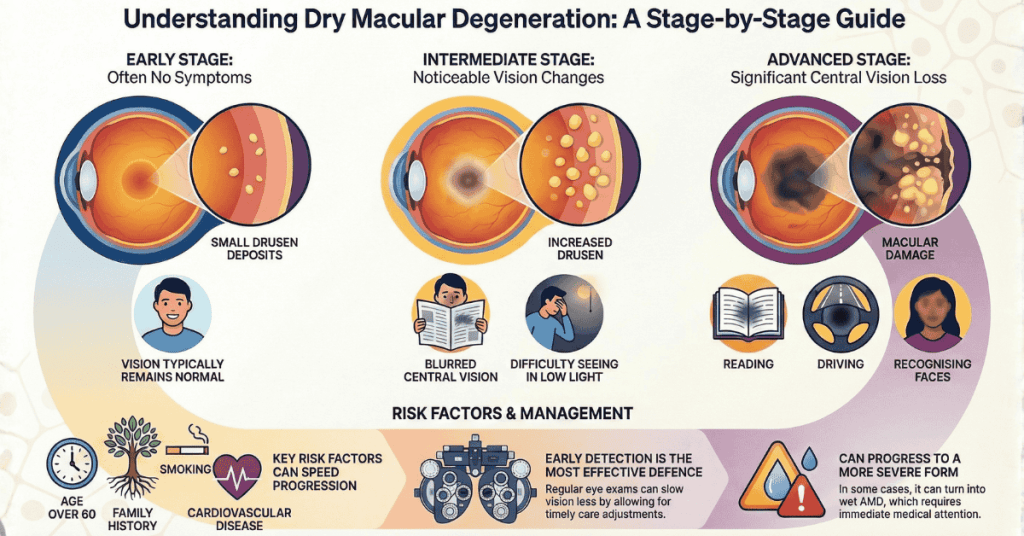
These stages include early, intermediate, and advanced disease progression, also referred to as dry AMD stages in clinical settings.
Early Stage Dry Macular Degeneration
Early stage dry macular degeneration is often asymptomatic, meaning many people don’t realize they have it. At this stage, small drusen forms beneath the retina, but vision usually remains normal.
Because there may be no noticeable vision changes, early detection often occurs during routine eye exams. Even though symptoms are minimal, this stage is important because lifestyle changes, such as quitting smoking, managing blood pressure, and improving nutrition, can slow progression.
At this point, degeneration does not interfere significantly with daily life, but regular monitoring is essential.
Intermediate Dry Macular Degeneration
Intermediate dry macular degeneration is marked by larger drusen deposits and more noticeable visual changes. Patients may begin to experience:
- Blurred central vision
- Difficulty seeing in low light
- Trouble reading small print
- Subtle distortion in straight lines
Vision loss is still gradual, but daily tasks may become more challenging. Many eye doctors recommend specific vitamin supplements based on AREDS2 studies during this stage to help reduce the risk of further progression.
Advanced Dry Macular Degeneration
Advanced dry macular degeneration is the most severe form and can result in significant central vision loss. This stage may include geographic atrophy, where retinal cells in the macula deteriorate permanently.
People with advanced disease may struggle with:
- Recognizing faces
- Reading or writing
- Driving
- Performing tasks that require detailed vision
Peripheral (side) vision often remains intact, but central vision impairment can greatly affect independence. Although treatments cannot reverse damage, vision rehabilitation tools and assistive devices can improve quality of life.
How Dry Macular Degeneration Progresses Over Time
The progression of degeneration varies widely. Some people remain in the early stage for many years, while others move more quickly into intermediate or advanced stages. Genetics, smoking, diet, age, and overall health all influence how fast the condition progresses.
Regular eye exams allow specialists to track changes and adjust care plans accordingly. Early detection remains the most effective way to slow vision loss.
Risk Factors That Influence Progression
Several factors can increase the likelihood of progression:
- Aging (especially over age 60)
- Family history of macular degeneration
- Smoking
- Poor diet low in antioxidants
- Cardiovascular disease
Can Dry Macular Degeneration Become More Severe?
Although it is a gradual condition, Dry macular degeneration can sometimes progress into wet AMD, a more aggressive form involving abnormal blood vessel growth. This transformation is less common but requires immediate medical attention.
Monitoring symptoms such as sudden vision distortion or dark spots is essential for early intervention.
Living With Macular Degeneration
While there is no cure, many people live full lives with dry macular degeneration by using adaptive strategies such as:
- Magnifying devices
- Improved lighting
- Large-print materials
- Vision rehabilitation services
Staying proactive with eye care can make a meaningful difference in maintaining independence.
Final Thoughts
Understanding the progression and stages of dry macular degeneration empowers individuals to take control of their eye health. While dry macular degeneration is a lifelong condition, early detection, healthy habits, and ongoing monitoring can slow its impact and help preserve vision for as long as possible. From routine eye exams to specialized glaucoma care, our experienced team is committed to lifelong eye health. Looking for trusted eye care near you? Baumrind Eye provides comprehensive vision services, including expert management, with a patient-focused approach you can rely on. Have questions or need to schedule an appointment? Contact us today to connect with our friendly team and take the next step toward healthier vision. Patients praise the clinic for its professional care, thorough exams, and friendly staff, making Baumrind Eye a trusted choice for retina and macular health in Atlanta.
FAQs About Dry Macular Degeneration:
How does dry macular degeneration progress over time?
It typically progresses slowly, moving from early to intermediate and eventually advanced stages. The rate of progression varies depending on genetics, lifestyle, and overall health.
How fast does dry macular degeneration worsen?
Progression can take years, and some people never reach advanced stages. Regular eye exams help track changes and manage risks effectively.
What are the symptoms of early-stage dry macular degeneration?
Early stages often have no noticeable symptoms. Some people may experience mild difficulty seeing in low light or subtle vision changes.
Can dry macular degeneration turn into wet AMD?
Yes, in some cases it can progress into wet AMD, which causes faster and more severe vision loss. Sudden changes in vision should be evaluated immediately.
What happens in the advanced stage of dry macular degeneration?
Advanced stages involve significant central vision loss due to retinal cell damage. Peripheral vision usually remains, but daily tasks become more challenging.


